
Reasons for Hope: What the Data Really Says About the World Students Are Entering
- seanmsweeney8
- Sep 24, 2025
- 3 min read
Scroll the news on any given day and it’s easy to feel overwhelmed. Climate change. Wars. Debt. Division. For many students, the future feels less like an open horizon and more like a wall closing in.
And it’s true — some challenges are sharper today than in past generations:
The cost of education has climbed steadily, leaving many graduates with significant debt.
The cost of housing has made owning a home feel out of reach for many under 30.
A rapidly changing job market creates uncertainty about which skills will matter tomorrow.
These realities shape how students think about adulthood. They add weight to anxiety, loneliness, and job-search stress. Ignoring them would be dishonest.
But here’s the other truth: if we step back and look at the bigger picture, another story emerges. It’s not the story that dominates headlines, but it may just change how students see their path forward.
The World Is Safer Than It Feels
In The Better Angels of Our Nature, Harvard psychologist Steven Pinker showed that violence has been declining for centuries. Homicide rates in Europe have fallen by more than 90% since the Middle Ages.
Despite what nightly news cycles suggest, students are not entering the most violent era in history. They are entering one of the safest.
Poverty and Disease Are in Retreat
Hans Rosling, author of Factfulness, urged us to look at the long arc of human progress. In 1800, more than 80% of the world lived in extreme poverty. Today, it’s under 9%.
Life expectancy has doubled in the past century. Childhood mortality has fallen by more than half since 1990. Diseases that once cut lives short — smallpox, polio — have been eradicated or nearly eliminated.
For today’s students, this means more health, more time, and more opportunity than their grandparents ever imagined.
Education and Opportunity Are Expanding
Global literacy now exceeds 90%. More young people — and especially young women — are in school than at any other time in history. While inequality remains, access to education, technology, and networks has never been wider.
The phone in a student’s pocket holds more information than entire libraries once did. If knowledge is power, then students today carry power with them wherever they go.
Balancing Realism with Hope
Yes, homes cost more. Yes, tuition can be crushing. Yes, the job market feels uncertain. Those are real headwinds.
But here’s what matters: students still have agency over how they respond. They can’t control macroeconomics or housing policy. But they can control how they prepare, what skills they build, and how they define success for themselves.
Hope doesn’t erase difficulty. It balances it. It says: focus on what you can control. Build resilience. Cultivate relationships. Know yourself. Those are the arrows every student can shape, no matter how strong the wind.
Fletcher Circle’s Perspective
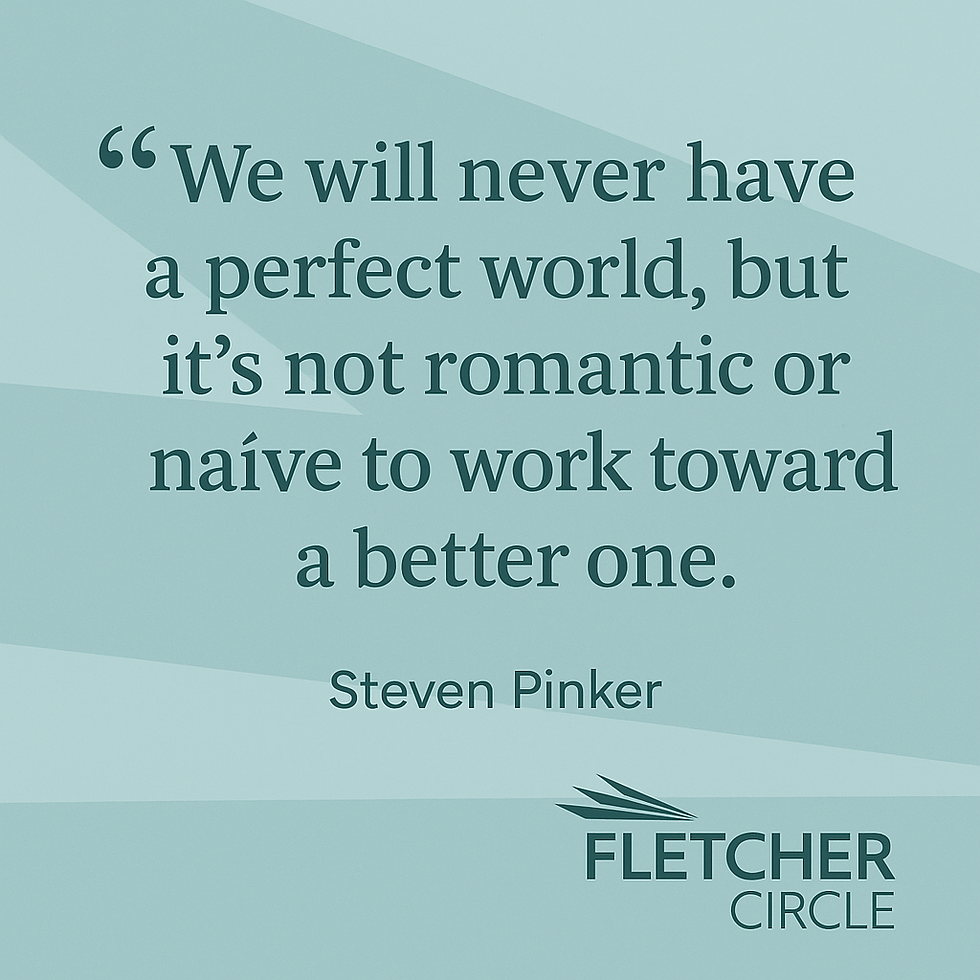
At Fletcher Circle, we believe students deserve both honesty and hope. Honesty about the challenges they face today. Hope rooted in the data that shows tomorrow can be better.
The goal isn’t blind optimism. It’s grounded optimism — a reminder that progress is possible, and that every generation has a chance to build on what came before.
The greatest thing students can do right now is to belong to themselves — to know their strengths, values, and goals. With that foundation, envy loses power, comparison fades, and confidence grows.
The arrow may face resistance, but with clarity and courage, it can still fly true.


Comments